
Cable Selection and Connectivity in Machine Vision Components: A Techn…
페이지 정보
작성자 Gloria 작성일26-07-13 23:10 조회3회 댓글0건관련링크
본문
Industry data on machine vision deployments consistently points to one uncomfortable statistic: a significant share of system downtime traced back to imaging equipment originates not from the camera or sensor itself, but from cabling failures, connector fatigue, or signal degradation over distance. Estimates from field service reports across automation sectors suggest that cabling and connectivity issues account for roughly 20-30% of unplanned maintenance calls involving vision-guided robotics and inspection lines. For engineers responsible for specifying machine vision components, this figure reframes cable selection from an afterthought into a core reliability decision, one that directly affects mean time between failures and total cost of ownership.
Choosing the right cable and connector architecture is rarely as simple as matching a plug to a socket. Bandwidth requirements, transmission distance, electromagnetic interference, mechanical flexing, and environmental exposure all interact to determine whether a vision system performs consistently on a factory floor or becomes a recurring source of frustration. This article examines the practical criteria that system integrators and automation specialists should apply when they buy machine vision components, with particular attention to how connectivity choices influence both image quality and long-term durability. vision System Components
Why Does Cable Choice Matter More in Machine Vision Than in Standard Industrial Wiring?
Machine vision systems transmit extremely high-bandwidth data streams in real time, often at rates exceeding several gigabits per second when working with high-resolution area scan or line scan sensors. Unlike a simple digital I/O signal that tolerates minor noise or brief interruptions, image data is sensitive to timing jitter, signal attenuation, and electromagnetic interference that can introduce visible artifacts, dropped frames, or synchronization errors between camera and lighting triggers. A single corrupted frame in a quality control application can mean a missed defect passing downstream, which carries far greater cost than the cable itself.
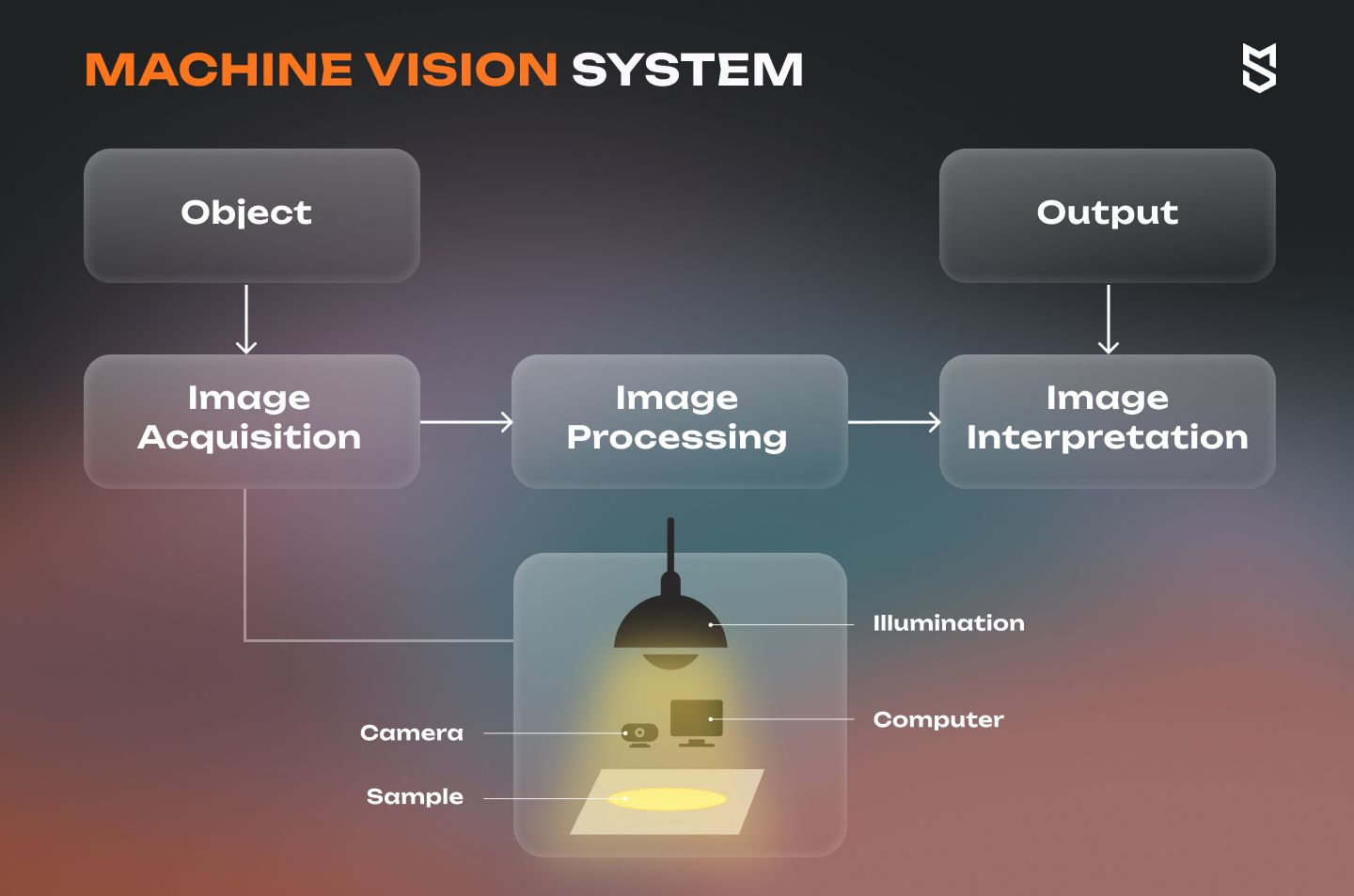
This sensitivity is why manufacturers of industrial-grade machine vision cameras specify exact cable categories, shielding requirements, and maximum run lengths for each interface type. Ignoring these specifications does not always cause immediate failure; instead, it often produces intermittent faults that are difficult to diagnose, such as occasional frame drops under specific machine vibration conditions or thermal cycles. Like a chain that appears intact until the weakest link is placed under load, a vision system may function acceptably in initial testing yet fail once deployed near a servo drive, a welding cell, or a variable frequency drive that introduces electrical noise into the environment.
Which Interface Standards Should Drive Your Connectivity Decisions?
Four interface families dominate current machine vision systems: GigE Vision, USB3 Vision, Camera Link, and CoaXPress. Each defines not only a communication protocol but also specific cable and connector requirements that engineers must respect to guarantee rated performance. GigE Vision, built on standard Ethernet physical layers, allows cable runs up to 100 meters using Cat 6 or Cat 6a cabling, making it attractive for installations where the camera sits far from the processing unit, such as on a gantry-mounted inspection station spanning a wide conveyor line.
USB3 Vision offers higher throughput than GigE at short range, typically limited to 3-5 meters without active extension, which suits compact robotic end-of-arm tooling where the camera and controller are physically close. Camera Link and its successor Camera Link HS demand specialized shielded cables with locking connectors capable of sustaining very high bandwidth, but they cap out at shorter distances and require a frame grabber card, adding cost and complexity. CoaXPress has gained traction for high-speed, long-distance applications because it transmits over coaxial cable, supporting runs up to 40 meters at multi-gigabit speeds while remaining relatively resistant to interference, which makes it a strong candidate for high-throughput sorting or web inspection systems. ClearViewImaging
How Do Shielding and Grounding Affect Signal Integrity?
Shielding is not a uniform specification; it varies by application and by the electrical noise profile of the installation environment. Foil-shielded cables (often labeled FTP) provide baseline protection against low-frequency interference and suit environments with moderate electrical noise, such as general assembly lines. Braided shielding, or a combination of foil and braid (SFTP), offers superior protection against higher-frequency noise sources like variable frequency drives, servo motors, and high-current switching equipment commonly found near robotic welding or stamping operations.
Proper grounding of the shield at both ends of the cable run, or in some cases only at one end depending on the interface standard and local electrical code, prevents ground loops that can introduce their own noise into the image signal. Integrators sourcing machine vision systems for demanding environments should confirm that connectors include a full 360-degree shield termination rather than a simple drain wire, since drain wires provide markedly weaker high-frequency noise rejection. This distinction often separates a cable that performs reliably for years from one that generates sporadic, hard-to-trace image artifacts within months of installation.

What Physical and Environmental Factors Determine Cable Longevity?
Beyond electrical performance, mechanical durability determines how long a cable survives in a working automation cell. Continuous-flex or robotic-rated cables use specially stranded conductors and reinforced jacketing designed to withstand millions of bend cycles, a requirement for any camera mounted on a moving robot arm or a linear actuator. Standard cabling, by contrast, uses solid or lightly stranded conductors that fatigue and crack internally after repeated flexing, often failing invisibly until a connection becomes intermittent.
Temperature range, chemical exposure, and washdown requirements further narrow suitable cable choices. Food and beverage inspection lines frequently require IP67-rated connectors and cable jackets resistant to caustic cleaning agents, while foundries or metal fabrication environments demand high-temperature-rated insulation and abrasion-resistant outer sheaths. Selecting a cable rated only for indoor office conditions in one of these settings is a common and costly mistake; the jacket may crack within weeks, exposing conductors to moisture and causing gradual signal degradation long before outright failure occurs. ClearView Machine Vision
Are Affordable Machine Vision Components a Reliable Option for Cabling?
Budget pressure often pushes integrators toward lower-cost cabling and connector options, and it is reasonable to ask whether affordable machine vision components can meet the same reliability bar as premium-branded equivalents. The honest answer depends heavily on the specific application. For a fixed-mount inspection camera in a climate-controlled, low-vibration environment with a short cable run, a well-specified mid-tier cable that meets the correct category and shielding rating can perform reliably for years, since the mechanical and electrical stresses are minimal.
The calculation changes considerably in harsher settings. Consider a hypothetical case: an integrator installs a GigE camera on a robotic pick-and-place cell using a generic, non-continuous-flex Cat 6 cable to save on upfront cost, perhaps 15% cheaper than a robotic-rated equivalent. Within three to six months of constant flexing, intermittent packet loss appears, causing missed picks and unplanned line stops that cost far more in lost throughput than the original savings. In this scenario, the lower purchase price masked a much higher lifecycle cost, illustrating why cable selection should be evaluated against total cost of ownership rather than unit price alone.
Connector Types and Locking Mechanisms: What Should Integrators Verify Before Purchase?
Connector reliability under vibration is as important as the cable itself. Screw-locking M12 connectors are common in GigE Vision installations because they resist loosening from continuous machine vibration, a frequent cause of connectivity faults in press lines and conveyor systems. USB3 connectors, by contrast, historically lacked a robust locking mechanism in early consumer-grade implementations, which pushed the industry toward locking USB3 variants specifically designed for machine vision applications; integrators should confirm that any USB3 camera and cable pairing uses these locking connectors rather than standard consumer USB hardware.
Connector plating also affects long-term reliability. Gold-plated contacts resist oxidation better than nickel-plated alternatives, an important consideration in humid or chemically active environments where corrosion can gradually increase contact resistance and degrade signal quality. When evaluating where to buy machine vision components, it is worth requesting connector datasheets that specify plating material, mating cycle ratings, and ingress protection rating, since these details rarely appear in marketing copy but directly determine field performance.
Weighing the Trade-Offs: Premium Cabling Versus Cost-Optimized Alternatives
Premium, purpose-built machine vision cabling offers clear advantages: certified shielding performance, guaranteed bend-cycle ratings, environmental sealing, and manufacturer support for troubleshooting signal issues. These benefits translate into fewer unplanned stoppages and more predictable maintenance scheduling, which matters considerably in high-throughput production where every minute of downtime has a quantifiable cost. The trade-off is upfront price, which can run two to four times higher than generic industrial cabling for equivalent length and interface type.
How Should Cable Length and Signal Loss Be Calculated for Long Runs?
Getting the Cabling Decision Right: A Practical Summary
Frequently Asked Questions
What is the maximum reliable cable length for a GigE Vision camera?
Standard copper Cat 6 or Cat 6a cabling supports up to 100 meters under the GigE Vision specification, though noisy electrical environments can reduce practical reliable distance. For longer runs or high-interference areas, fiber-optic extenders are the more dependable choice.
Can I use a standard consumer USB3 cable with a machine vision camera?
It is not recommended, since consumer USB3 cables typically lack the locking connectors and shielding required for industrial vibration and noise conditions. Locking, machine-vision-rated USB3 cables are designed specifically to prevent disconnection and signal loss in these environments.
How often should machine vision cables be inspected or replaced?
Cables on static, low-flex installations should be visually inspected during scheduled maintenance intervals, typically every six to twelve months. Cables on robotic or continuously moving axes should be checked more frequently and replaced proactively once they approach their rated bend-cycle life, rather than waiting for failure.
Is Camera Link still a good choice for new machine vision installations?
Camera Link remains viable for applications requiring very high bandwidth over short distances, but many new installations favor CoaXPress or GigE Vision for their longer cable runs and simpler cabling infrastructure. The right choice depends on required frame rate, resolution, and existing frame grabber compatibility.
Does cable shielding really make a measurable difference in image quality?
Yes, particularly near motors, drives, or welding equipment where electromagnetic interference can introduce visible noise, banding, or dropped frames in the image stream. Properly shielded and grounded cabling significantly reduces these artifacts compared to unshielded alternatives.
What is the typical cost difference between industrial-rated and standard cabling?
Industrial or robotic-rated cabling generally costs two to four times more than standard equivalents of the same length and interface type. The added cost is usually justified in environments with vibration, flexing, or harsh conditions, where premature cable failure would otherwise cause far greater downtime costs.
댓글목록
등록된 댓글이 없습니다.