
Elsevier Science. August 1, 2025. p
페이지 정보
작성자 Armand 작성일25-10-22 14:29 조회24회 댓글0건관련링크
본문
 A gentle-emitting diode (LED) is a semiconductor machine that emits gentle when present flows through it. Electrons in the semiconductor recombine with electron holes, reduce energy consumption releasing vitality in the form of photons. The coloration of the light (corresponding to the energy of the photons) is set by the vitality required for electrons to cross the band hole of the semiconductor. White gentle is obtained through the use of a number of semiconductors or a layer of mild-emitting phosphor on the semiconductor machine. Appearing as sensible electronic elements in 1962, the earliest LEDs emitted low-intensity infrared (IR) mild. Infrared LEDs are used in distant-control circuits, akin to these used with a large number of shopper electronics. The primary seen-mild LEDs were of low depth and restricted to red. Early LEDs were typically used as indicator lamps, changing small incandescent bulbs, and in seven-section shows. Later developments produced LEDs accessible in visible, ultraviolet (UV), and infrared wavelengths with excessive, low, or intermediate mild output; for instance, white LEDs suitable for room and outdoor lighting.
LEDs have also given rise to new kinds of shows and EcoLight products sensors, while their high switching charges have makes use of in superior communications know-how. LEDs have been used in diverse functions akin to aviation lighting, fairy lights, strip lights, automotive headlamps, advertising, stage lighting, common lighting, energy-efficient bulbs site visitors alerts, digital camera flashes, lighted wallpaper, horticultural grow lights, and medical gadgets. LEDs have many advantages over incandescent mild sources, including decrease power consumption, an extended lifetime, improved bodily robustness, smaller sizes, EcoLight products and faster switching. In change for these generally favorable attributes, disadvantages of LEDs include electrical limitations to low voltage and usually to DC (not AC) energy, the inability to provide regular illumination from a pulsing DC or an AC electrical provide source, and a lesser maximum working temperature and storage temperature. LEDs are transducers of electricity into gentle. They function in reverse of photodiodes, which convert gentle into electricity. Electroluminescence from a solid state diode was found in 1906 by Henry Joseph Spherical of Marconi Labs, and was revealed in February 1907 in Electrical World.
Spherical noticed that numerous carborundum (silicon carbide) crystals would emit yellow, gentle inexperienced, orange, or blue gentle when a voltage was passed between the poles. From 1968, industrial LEDs were extraordinarily pricey and saw no practical use. In the early nineties, Shuji Nakamura, Hiroshi Amano and Isamu Akasaki developed blue gentle-emitting diodes that have been dramatically extra efficient than their predecessors, bringing a new generation of shiny, power-efficient white lighting and EcoLight products full-colour LED displays into sensible use. For this work, they gained the 2014 Nobel Prize in Physics. In a gentle-emitting diode, the recombination of electrons and electron holes in a semiconductor dimmable LED bulbs produces mild (infrared, visible or UV), a course of called electroluminescence. The wavelength of the light depends on the power band hole of the semiconductors used. Since these materials have a excessive index of refraction, design options of the gadgets resembling particular optical coatings and die form are required to efficiently emit gentle. Not like a laser, the light emitted from an LED is neither spectrally coherent nor even extremely monochromatic.

Its spectrum is sufficiently slim that it appears to the human eye as a pure (saturated) color. Additionally unlike most lasers, its radiation is not spatially coherent, so it can not method the very excessive intensity characteristic of lasers. By choice of various semiconductor supplies, single-shade LEDs will be made that emit gentle in a slim band of wavelengths, from the near-infrared by way of the seen spectrum and into the ultraviolet range. The required operating voltages of LEDs increase because the emitted wavelengths turn into shorter (higher vitality, purple to blue), due to their growing semiconductor EcoLight LED band hole. Blue LEDs have an active region consisting of one or more InGaN quantum wells sandwiched between thicker layers of GaN, referred to as cladding layers. By various the relative In/Ga fraction in the InGaN quantum wells, the sunshine emission can in concept be different from violet to amber. Aluminium gallium nitride (AlGaN) of various Al/Ga fraction can be utilized to manufacture the cladding and quantum nicely layers for ultraviolet LEDs, however these units have not yet reached the extent of effectivity and technological maturity of InGaN/GaN blue/green devices.
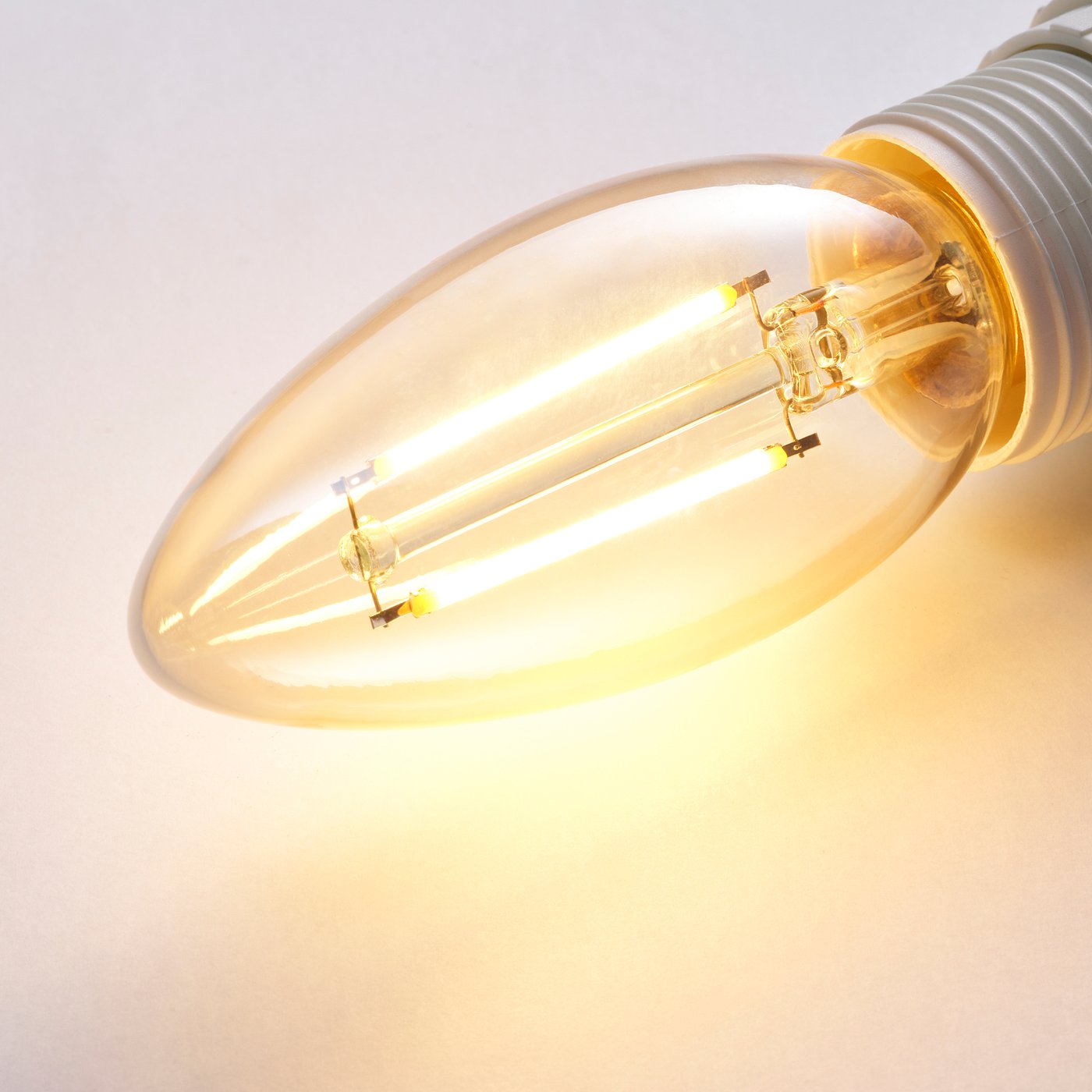 If unalloyed GaN is used in this case to kind the energetic quantum well layers, the machine emits near-ultraviolet gentle with a peak wavelength centred around 365 nm. Inexperienced LEDs manufactured from the InGaN/GaN system are far more efficient and brighter than green LEDs produced with non-nitride material programs, EcoLight products however practical devices nonetheless exhibit effectivity too low for EcoLight products high-brightness purposes. With AlGaN and AlGaInN, even shorter wavelengths are achievable. Near-UV emitters at wavelengths around 360-395 nm are already low-cost and infrequently encountered, for instance, as black gentle lamp replacements for inspection of anti-counterfeiting UV watermarks in paperwork and financial institution notes, and for UV curing. Substantially costlier, shorter-wavelength diodes are commercially accessible for EcoLight products wavelengths all the way down to 240 nm. As the photosensitivity of microorganisms roughly matches the absorption spectrum of DNA, with a peak at about 260 nm, UV LED emitting at 250-270 nm are anticipated in potential disinfection and sterilization units. Current analysis has shown that commercially available UVA LEDs (365 nm) are already effective disinfection and EcoLight solar bulbs sterilization devices.
댓글목록
등록된 댓글이 없습니다.